Ham Radio CW: Getting Started with Morse Code
New to ham radio CW? Learn what continuous wave is, why Morse code still thrives, the Koch learning method, and how to make your first contact.
Published by
Morse Code Translator TeamThis article is published by the Morse Code Translator team. Technical and historical claims should be checked against the references linked in the article; see our editorial policy for how content is maintained.
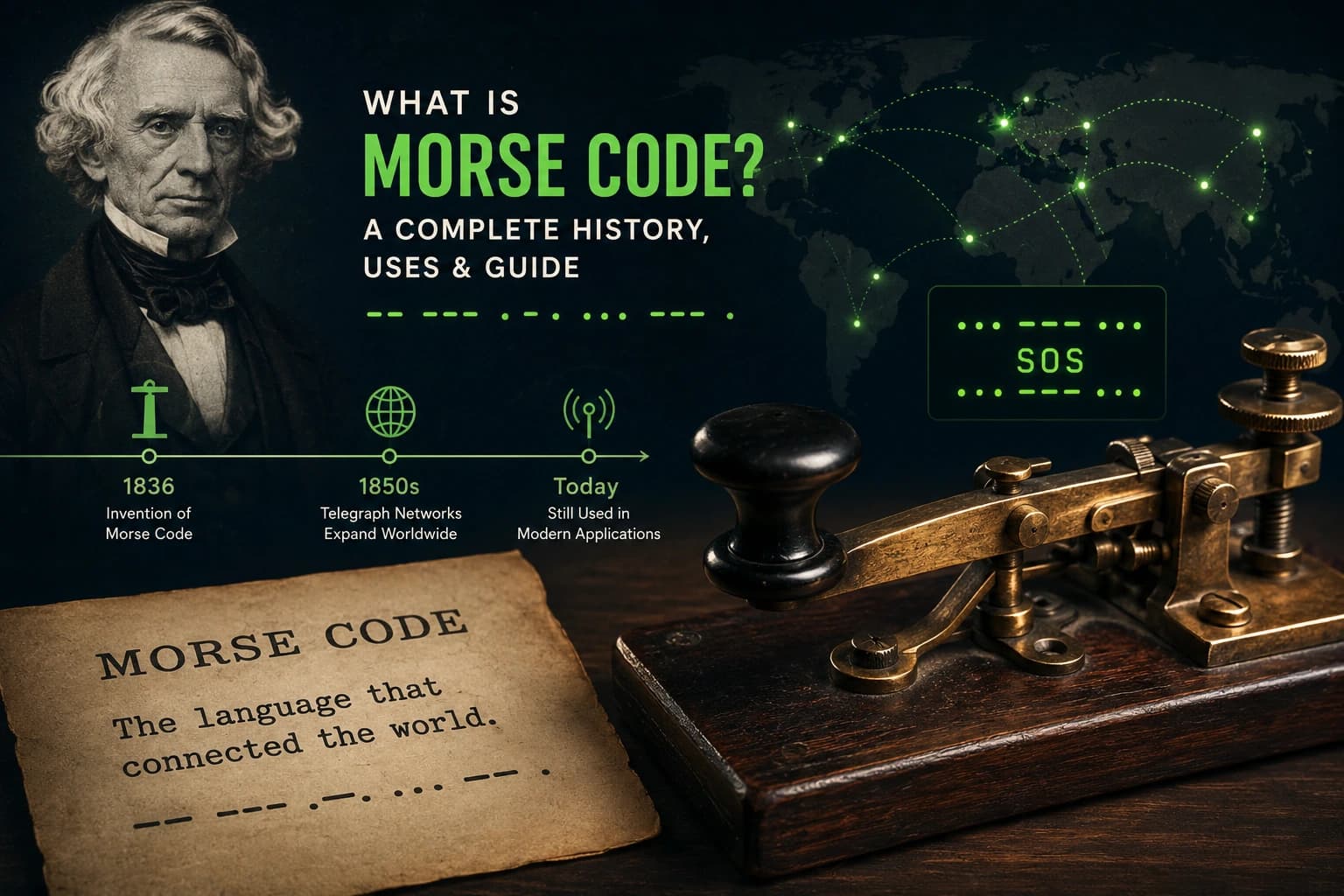
In amateur radio, Morse code goes by the name CW, short for continuous wave. More than a century after it was born, CW remains one of the most popular ways hams talk to each other, and getting started is easier than most newcomers expect.
What Is CW?
CW is Morse code sent by radio: the transmitter switches a carrier wave on and off in dot-and-dash patterns. It is the original digital mode, and it is brutally efficient. A CW signal can punch through noise and cross continents on just a few watts of power, which is why low-power enthusiasts and DX chasers love it.
You will hear it on the lower portions of the HF bands, especially around the traditional calling frequencies on 40, 20, and 15 meters.
Do You Need Morse Code for a License?
No. You do not need to know Morse code to get an amateur radio license anymore. The international requirement was made optional in 2003, and the FCC eliminated the Morse examination for all US license classes effective February 23, 2007. Today you earn your Technician, General, or Extra license with written exams only.
That change actually helped CW: people now learn it because they *want* to, not because a test forces them to, and the CW portions of the bands are as lively as ever.
Why Hams Still Love Morse Code
- Weak-signal performance: CW gets through when voice cannot, making it ideal for low power (QRP) and poor conditions.
- Simplicity: A basic CW station can be astonishingly simple and cheap to build.
- DX and contests: Many rare stations and contests operate heavily or exclusively in CW.
- The skill itself: Operators describe the moment the code “clicks” and stops sounding like dots and dashes as one of the hobby's great satisfactions.
Learning CW: The Koch Method
The most respected modern approach is the Koch method: you start with just two characters sent at full speed, and a new character is added only when you copy the current set with 90% accuracy. Learning characters at full speed from the start prevents the bad habit of counting individual dits and dahs.
Pair it with Farnsworth spacing: characters sent fast, but with extra-long gaps between them. Your brain learns the sound of each character as a single rhythm while your overall speed stays comfortable.
Practical routine: 15 minutes a day with a free Koch trainer app or website. Most learners reach a usable 12-15 words per minute within two to three months.
Your First Key: Straight Key vs. Paddle
Beginners usually start with a straight key: simple, cheap, and it teaches good timing fundamentals. When you are ready for speed, an electronic keyer with paddles sends perfectly formed dots and dashes for you. Either way, add a practice oscillator (or use software) so you can practice silently without transmitting.
Making Your First Contact
A typical beginner CW exchange is short and formulaic, which is reassuring:
- 1Call CQ CQ DE [your callsign] on a quiet frequency.
- 2Exchange callsigns, a signal report (RST, e.g. 599), and names.
- 3Sign off with 73 (best regards) and SK (end of contact).
Standard abbreviations do the heavy lifting: DE (from), R (received), TU (thank you), QTH (location). Nobody expects perfect sending from a newcomer; the CW community is famously patient with beginners.
Keep Practicing
Use our Morse Code Translator to check any character instantly, drill with the Morse Code Quiz, and study the alphabet chart until the patterns feel automatic. For structured lessons, the ARRL's learning resources ↗ are the gold standard, and your local club likely runs slow-speed CW nets that welcome newcomers.
Frequently Asked Questions
Do I need to know Morse code to get a ham radio license?
In the United States, no. The FCC removed the Morse code exam requirement for all amateur radio licenses effective February 23, 2007. Many hams still learn CW voluntarily because it is efficient and rewarding.
What does CW mean in ham radio?
CW stands for continuous wave. In amateur radio it refers to on-off keying of a radio carrier — the mode used to send Morse code. Hams often say “CW” when they mean Morse code operation.
What speed should a beginner aim for?
Start with character speeds around 12 to 15 words per minute with wider spacing between characters (Farnsworth spacing). The Koch method, which adds characters one at a time at full speed, is a proven way to build recognition.
What happens in a first CW contact?
A typical first exchange includes callsigns, a signal report (RST), your name, and your location. Keep it short, listen carefully, and don’t worry about mistakes — other operators expect them from beginners.
Keep Learning
Related Articles
How to Use a Morse Code Translator: A Beginner's Guide
Learn to use a Morse code translator step by step: text to Morse, Morse to text, spacing rules, and 5 accuracy tips.
The Titanic's Morse Code Distress Calls: What Happened
The true story of the Titanic's wireless room: Phillips and Bride, the CQD and SOS calls in Morse code, and how the disaster changed radio law.
Morse Code for Kids: 7 Fun Ways to Learn Dots and Dashes
Make Morse code fun for kids with 7 hands-on activities: flashlight messages, secret notes, bead bracelets, and scavenger hunts that teach real code.