Hello in Morse Code & 15 Common Phrases Translated
Complete translation of HELLO in Morse code plus 15 common phrases including OK, HELP, YES, NO, LOVE, GOODBYE, PLEASE, THANK YOU, SORRY, WELCOME, and more with full breakdowns.
Written and reviewed by
Morse Code Translator TeamOur editorial team researches, writes, and reviews content to provide clear and accurate information about Morse code, communication standards, learning methods, and related topics.
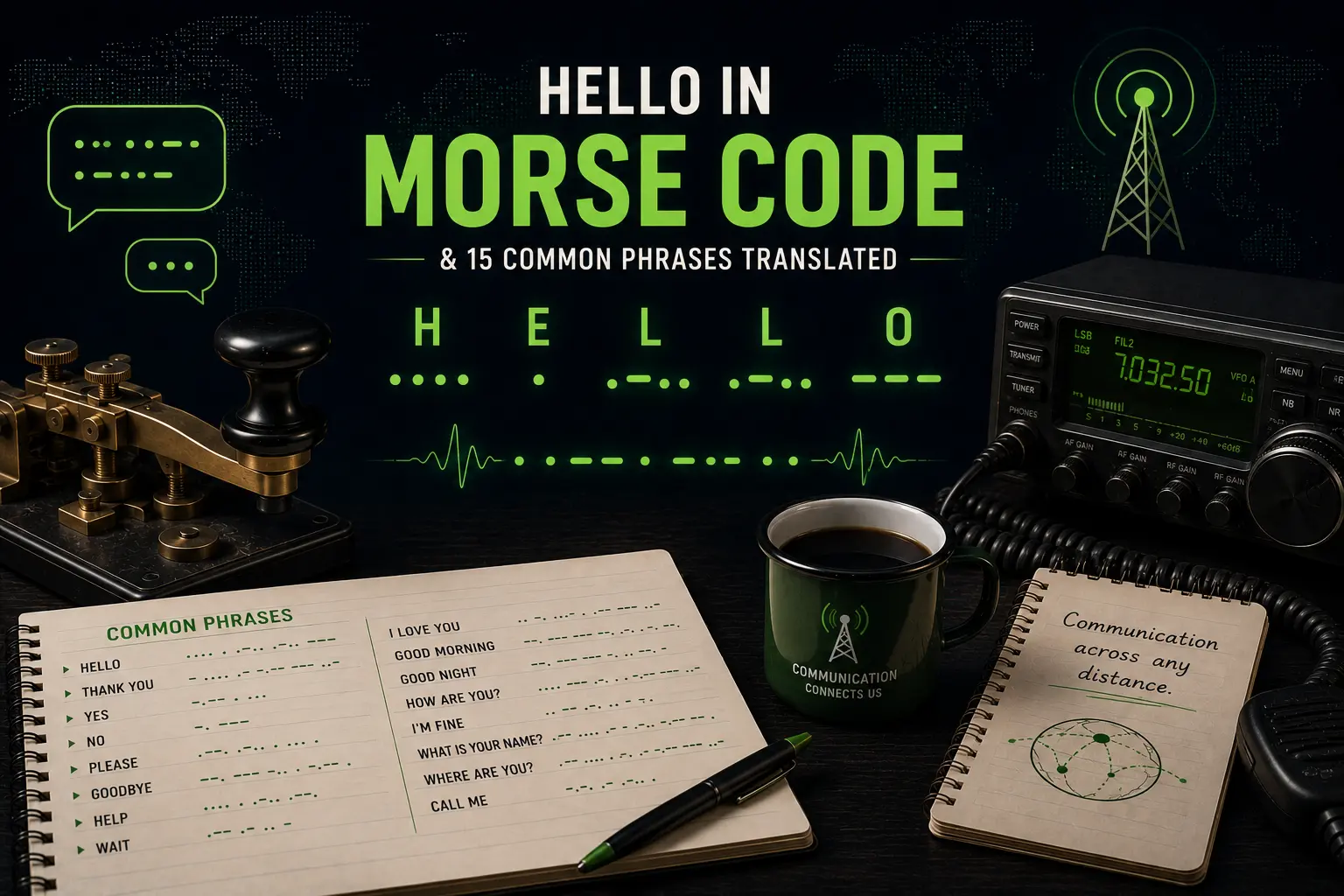
Knowing how to say common phrases in Morse code is both practical and fun. You can practice each phrase with our Morse Code Translator, then use the Morse Code Alphabet as a reference when you need to check individual characters. Whether you are learning the code for amateur radio, emergency preparedness, or personal interest, having a repertoire of common phrases at your fingertips will accelerate your learning and make practice more enjoyable. In this guide, we provide the complete Morse code translation for “HELLO” and 15 essential common phrases.
HELLO in Morse Code
H ···· E · L ·—·· L ·—·· O ———
Full sequence: ···· · ·—·· ·—·· ———
“HELLO” is one of the first words many people learn to send in Morse code because it is friendly, universal, and contains a good mix of character patterns. The double L (·—··) provides excellent practice for a four-element character, while the H (····) at the beginning gives you a warm-up with the simplest multi-element pattern.
15 Common Phrases in Morse Code
1. OK
O ——— K —·—
Full sequence: ——— —·—
“OK” is the most widely recognized word in the world and one of the easiest to send in Morse code. Two characters, both starting with dashes, and both highly distinctive patterns.
2. HELP
H ···· E · L ·—·· P ·——·
Full sequence: ···· · ·—·· ·——·
An essential phrase for emergency situations. “HELP” in Morse code can be signaled using sound, light, or any other medium to attract attention when you are in distress. For the dedicated breakdown, see our Help Me in Morse Code guide, and remember that genuine life-threatening emergencies should use the recognized SOS distress signal.
3. YES
Y —·——— E · S ···
Full sequence: —·——— · ···
The international Morse code for “yes” can be confirmed by sending a single dash (—), which is also commonly used as an affirmative response. But the full word “YES” provides unambiguous confirmation.
4. NO
N —· O ———
Full sequence: —· ———
In Morse code communication, a single dot (·) is often used as a negative response, equivalent to “no.” However, sending the full word removes any possibility of confusion.
5. LOVE
L ·—·· O ——— V ···— E ·
Full sequence: ·—·· ——— ···— ·
One of the most popular words to encode in Morse code for creative projects like jewelry, tattoos, and decorative items. Learn more about this in our dedicated I Love You guide.
6. GOODBYE
G ——· O ——— O ——— D —·· B —··· Y —·——— E ·
Full sequence: ——· ——— ——— —·· —··· —·——— ·
In amateur radio, the prosign SK (···—·—) is commonly used to indicate “end of contact” rather than sending the full word “GOODBYE.” Both are understood, but the prosign is more conventional on the air.
7. PLEASE
P ·——· L ·—·· E · A ·— S ··· E ·
Full sequence: ·——· ·—·· · ·— ··· ·
A polite word that is useful in formal Morse code communication, particularly in amateur radio exchanges where courtesy is valued.
8. THANK YOU
T — H ···· A ·— N —· K —·— Y —·——— O ——— U ··—
Full sequence: — ···· ·— —· —·— —·——— ——— ··—
In ham radio, “TNX” is commonly used as an abbreviation for “THANKS,” which is shorter to transmit. The full phrase is used in more formal or ceremonial contexts.
9. SORRY
S ··· O ——— R ·—· R ·—· Y —·———
Full sequence: ··· ——— ·—· ·—· —·———
Useful in Morse code conversation when you need to correct a mistake or apologize for a transmission error.
10. WELCOME
W ·—— E · L ·—·· C —·—· O ——— M —— E ·
Full sequence: ·—— · ·—·· —·—· ——— —— ·
A warm greeting when someone joins a Morse code conversation or frequency. In amateur radio, “GL” (good luck) or “GM” (good morning) / “GE” (good evening) are more commonly used time-of-day greetings.
11. GOOD NIGHT
G ——· O ——— O ——— D —·· N —· I ·· G ——· H ···· T —
Full sequence: ——· ——— ——— —·· —· ·· ——· ···· —
A pleasant sign-off for evening Morse code conversations. In ham radio, “73” is the standard sign-off prosign meaning “best regards,” but “GOOD NIGHT” adds a personal touch.
12. STOP
S ··· T — O ——— P ·——·
Full sequence: ··· — ——— ·——·
The prosign BT (—···—) is the traditional way to indicate a pause or separation within a Morse code message, but “STOP” can be used for emphasis or in less formal contexts.
13. HOW ARE YOU
H ···· O ——— W ·—— A ·— R ·—· E · Y —·——— O ——— U ··—
Full sequence: ···· ——— ·—— ·— ·—· · —·——— ——— ··—
In ham radio, “HW?” is a common abbreviation for “HOW ARE YOU?” that saves time during on-air exchanges. The full phrase is more appropriate for casual practice.
14. PEACE
P ·——· E · A ·— C —·—· E ·
Full sequence: ·——· · ·— —·—· ·
A meaningful word to encode in Morse code for creative projects. The rhythmic pattern of PEACE has a pleasant, flowing quality.
15. FRIEND
F ··—· R ·—· I ·· E · N —· D —··
Full sequence: ··—· ·—· ·· · —· —··
A warm word that works beautifully in Morse code jewelry and decorative projects. The variety of character patterns in “FRIEND” makes it excellent for practice.
Tips for Practicing Phrases
When practicing these phrases, keep these tips in mind:
- Start with shorter phrases. Begin with two-letter words like OK, NO, and HI before moving to longer phrases.
- Focus on rhythm, not counting. Each phrase should flow naturally. If you find yourself counting dots and dashes, slow down and focus on the sound.
- Write as you listen. Practice copying these phrases as they are sent, building your real-time decoding skills.
- Send them yourself. Use a straight key, paddles, or an electronic keyer to practice sending these phrases with proper timing.
- Combine phrases into sentences. Once you can send individual phrases, try combining them: “HELLO, HOW ARE YOU? THANK YOU.”
- Use them in context. If you are learning for amateur radio, practice using these phrases in simulated QSOs (contacts).
Use the translator above to practice each phrase.
Keep Learning
Related Articles
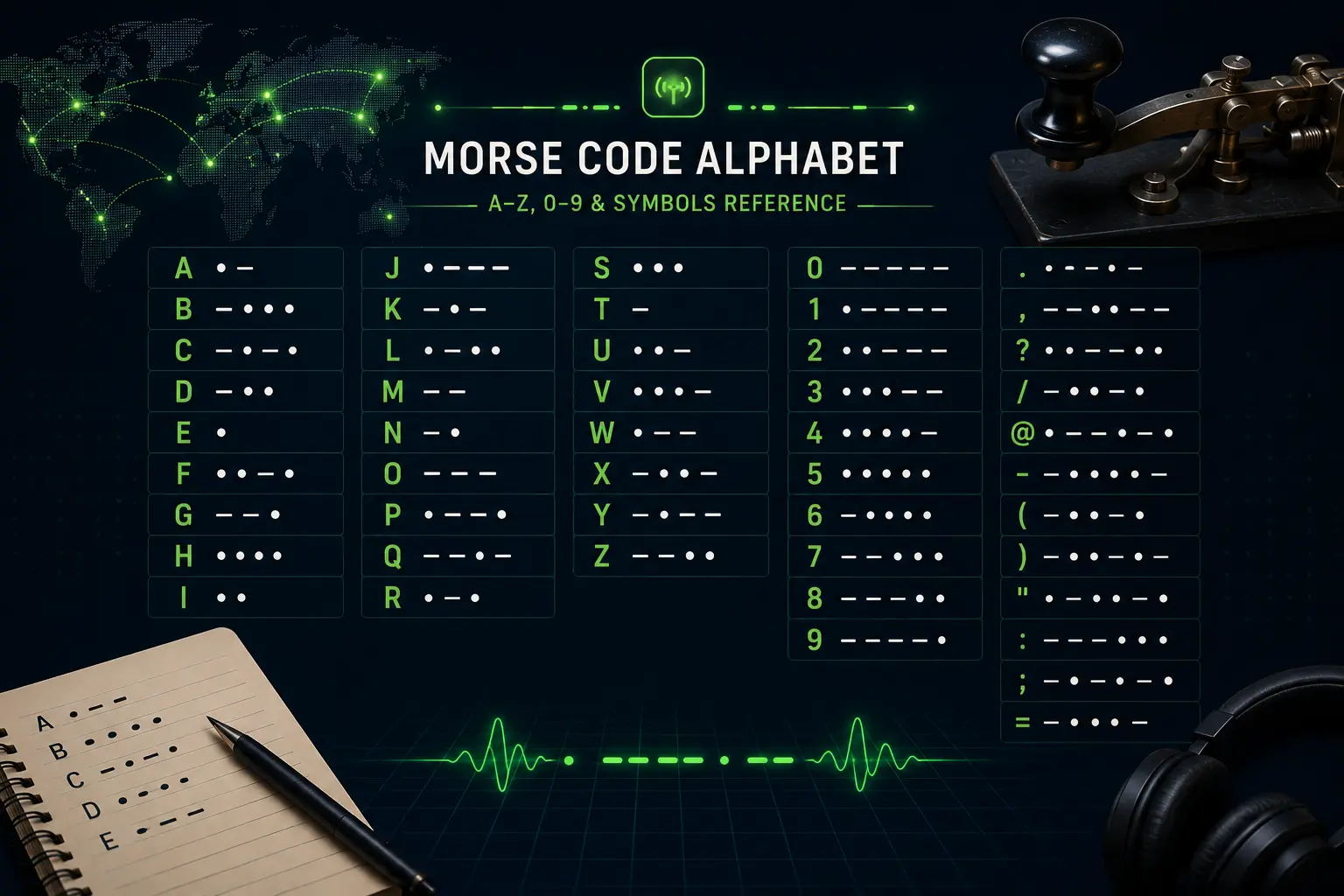
Morse Code Alphabet Chart: Complete A-Z, 0-9 & Symbols Reference
Full reference chart of all Morse code characters including letters A-Z, numbers 0-9, punctuation marks, and special characters with memorization tips and learning order recommendations.
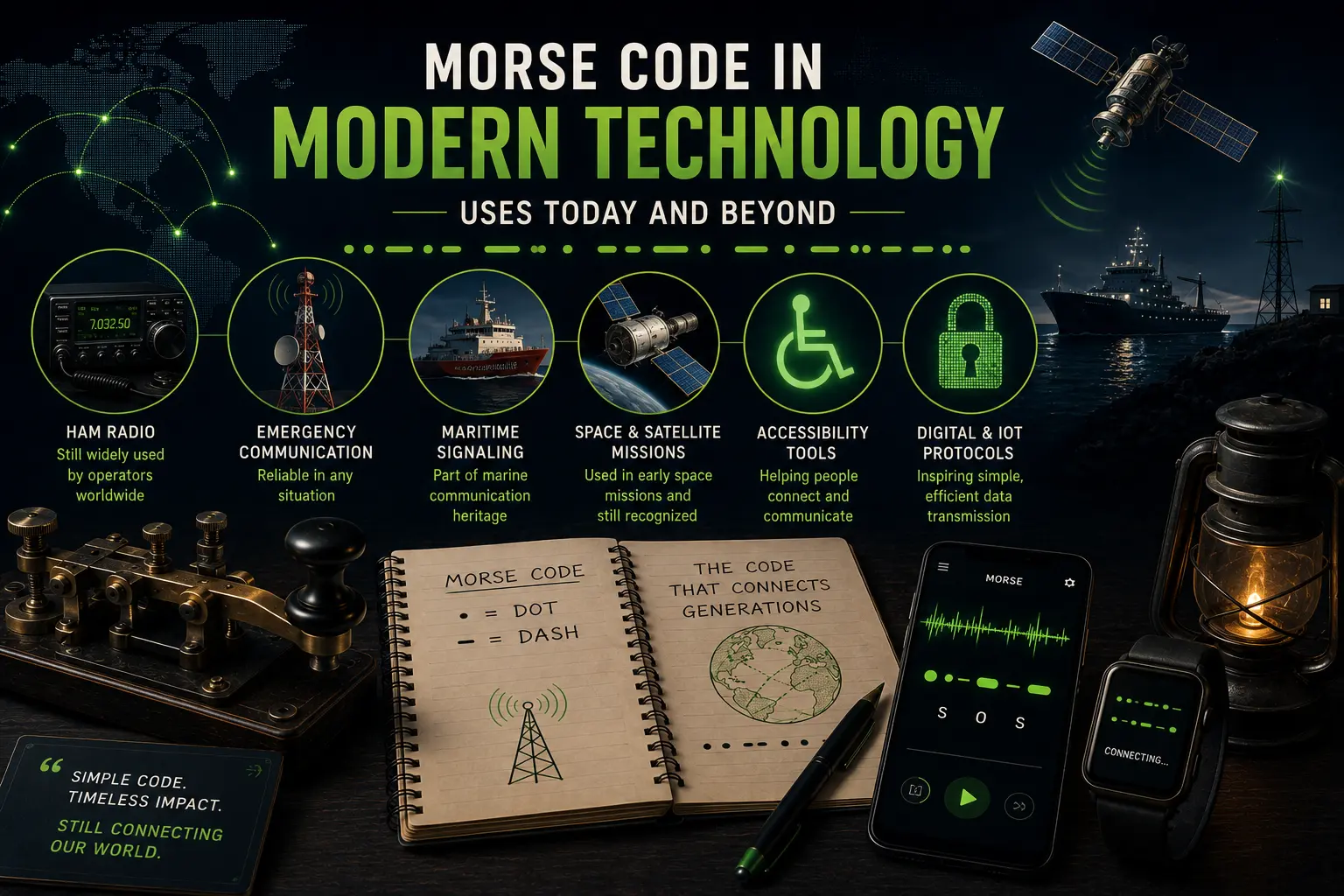
Morse Code in Modern Technology: Surprising Uses in 2025
Discover the surprising ways Morse code is used in modern technology from ham radio CW and accessibility tools to aviation NAVAIDs, maritime communication, iOS SOS, and military applications.
How to Learn Morse Code: 7 Proven Steps for Beginners
A step-by-step guide to learning Morse code from scratch using proven methods like the Koch method, Farnsworth timing, mnemonics, and daily practice routines.