The Titanic's Morse Code Distress Calls: What Happened
The true story of the Titanic's wireless room: Phillips and Bride, the CQD and SOS calls in Morse code, and how the disaster changed radio law.
Published by
Morse Code Translator TeamThis article is published by the Morse Code Translator team. Technical and historical claims should be checked against the references linked in the article; see our editorial policy for how content is maintained.
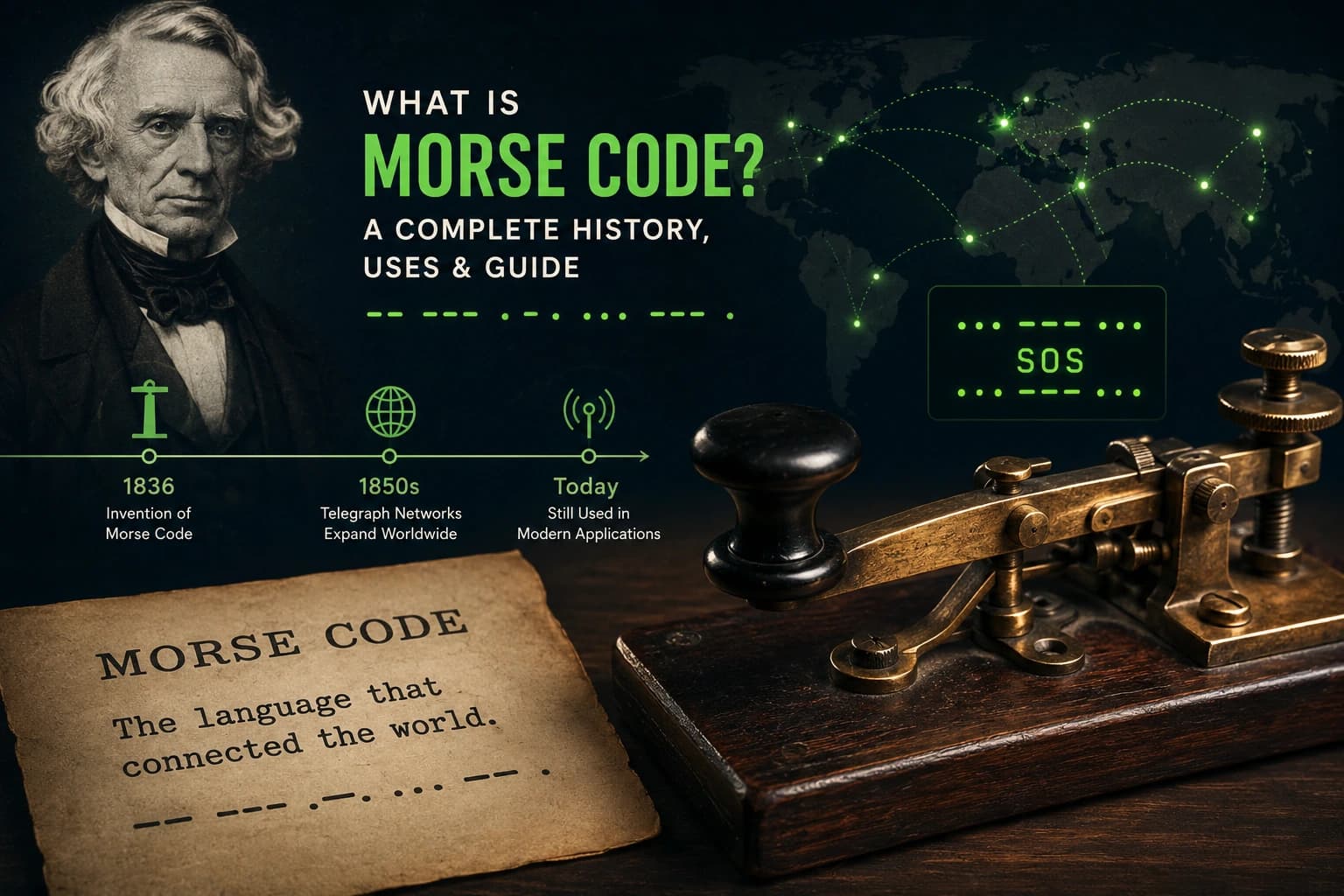
On the night of April 14, 1912, two young wireless operators tapped out some of the most famous Morse code messages in history as the RMS Titanic sank beneath the North Atlantic. Their story explains why we say SOS today, and it changed maritime law forever.
The Two Men in the Wireless Room
The Titanic's senior wireless operator was John “Jack” Phillips, 25, assisted by Harold Bride, 21. Both were employees of the Marconi Company, not the White Star Line, and both were graduates of Marconi's wireless telegraphy school. The ship's call sign was MGY, which identified every message as coming from the Titanic.
On a normal night, their job was commercial: relaying passenger telegrams, called Marconigrams, to shore stations. The wireless room was so busy with passenger traffic that when the nearby SS Californian warned of ice in the area, Phillips reportedly snapped back telling them to keep out because he was busy. The Californian's operator then switched off his set and went to bed, a decision with terrible consequences.
CQD: The Call They Started With
When Captain Smith ordered a distress signal sent shortly after midnight, Phillips began with CQD in Morse code: -.-. --. -. CQD was the Marconi Company's distress call. The CQ part was a general “calling all stations” signal used by telegraphers, and the D was added for distress or danger. Marconi operators had used it since 1904.
So the first cries for help from the sinking Titanic were CQD MGY followed by the ship's position, tapped out over and over into the night.
SOS: "It's the New Call"
There was, however, a newer distress signal. SOS (... --- ...) had been adopted internationally in 1906 and ratified in 1908 because its rhythm, three dots, three dashes, three dots, was unmistakable even through heavy interference. Contrary to popular belief, the letters never stood for anything: not “Save Our Ship,” not “Save Our Souls.” It was chosen purely because the pattern was simple and impossible to confuse.
According to Bride's later account, he half-jokingly told Phillips to try the new call: “Send S.O.S., it's the new call, and it may be your last chance to send it.” Phillips began alternating between the two, and messages like CQD CQD SOS Titanic. We are sinking fast crackled out as the ship's power faded.
The Ships That Heard, and the One That Didn't
The RMS Carpathia, about 58 nautical miles away, picked up the distress call. Captain Arthur Rostron immediately turned his ship around and raced through the ice field at full speed, arriving about four hours after the Titanic sank and rescuing roughly 700 survivors from the lifeboats.
The SS Californian sat only miles away, but with its wireless operator asleep, nobody aboard heard a thing. Its crew saw distress rockets but failed to grasp their meaning.
Phillips stayed at his key until Captain Smith relieved the operators, and he did not survive the night. Bride did, and his eyewitness testimony became one of the most important records of the disaster.
What Changed After the Titanic
The disaster exposed how chaotic wireless regulation was, and lawmakers acted fast:
- The Radio Act of 1912 required ships to maintain 24-hour wireless watches and gave distress traffic absolute priority.
- SOS became the undisputed global standard distress signal, replacing the patchwork of company-specific calls like CQD.
- Silent periods were introduced so distress calls could be heard clearly.
Try the Signals Yourself
You can see and hear exactly what Phillips tapped. Our Morse Code Translator converts any text to Morse instantly, and the dedicated SOS signal guide covers the distress call's full history and meaning. For the letter-by-letter patterns, see the Morse Code Alphabet chart.
Sources: Jack Phillips (wireless operator) on Wikipedia ↗), National Geographic: Why Titanic's first call for help wasn't an SOS ↗
Frequently Asked Questions
Did the Titanic send SOS or CQD?
Both. CQD was the older Marconi distress call, and SOS was the newer international signal. Wireless operator Jack Phillips sent CQD first, then added SOS at Harold Bride’s suggestion as the situation grew desperate.
Does SOS stand for “Save Our Souls”?
No. SOS does not stand for any phrase. It was chosen as an international distress procedure signal because the pattern (... --- ...) is simple, unmistakable, and easy to send and recognize, even through interference.
Why wasn’t the Titanic rescued sooner?
The closest ship, the Californian, had switched off its wireless set for the night and never heard the calls. The Carpathia received the distress signal and raced to the scene, but it was still hours away.
How did the Titanic disaster change radio law?
The disaster led to the Radio Act of 1912, which required passenger ships to keep a 24-hour wireless watch, gave distress calls absolute priority, and helped standardize SOS as the universal distress signal.
Keep Learning
Related Articles
How to Use a Morse Code Translator: A Beginner's Guide
Learn to use a Morse code translator step by step: text to Morse, Morse to text, spacing rules, and 5 accuracy tips.
Morse Code for Kids: 7 Fun Ways to Learn Dots and Dashes
Make Morse code fun for kids with 7 hands-on activities: flashlight messages, secret notes, bead bracelets, and scavenger hunts that teach real code.
Ham Radio CW: Getting Started with Morse Code
New to ham radio CW? Learn what continuous wave is, why Morse code still thrives, the Koch learning method, and how to make your first contact.