Morse Code Alphabet Chart: Complete A-Z, 0-9 & Symbols Reference
Full reference chart of all Morse code characters including letters A-Z, numbers 0-9, punctuation marks, and special characters with memorization tips and learning order recommendations.
Written and reviewed by
Morse Code Translator TeamOur editorial team researches, writes, and reviews content to provide clear and accurate information about Morse code, communication standards, learning methods, and related topics.
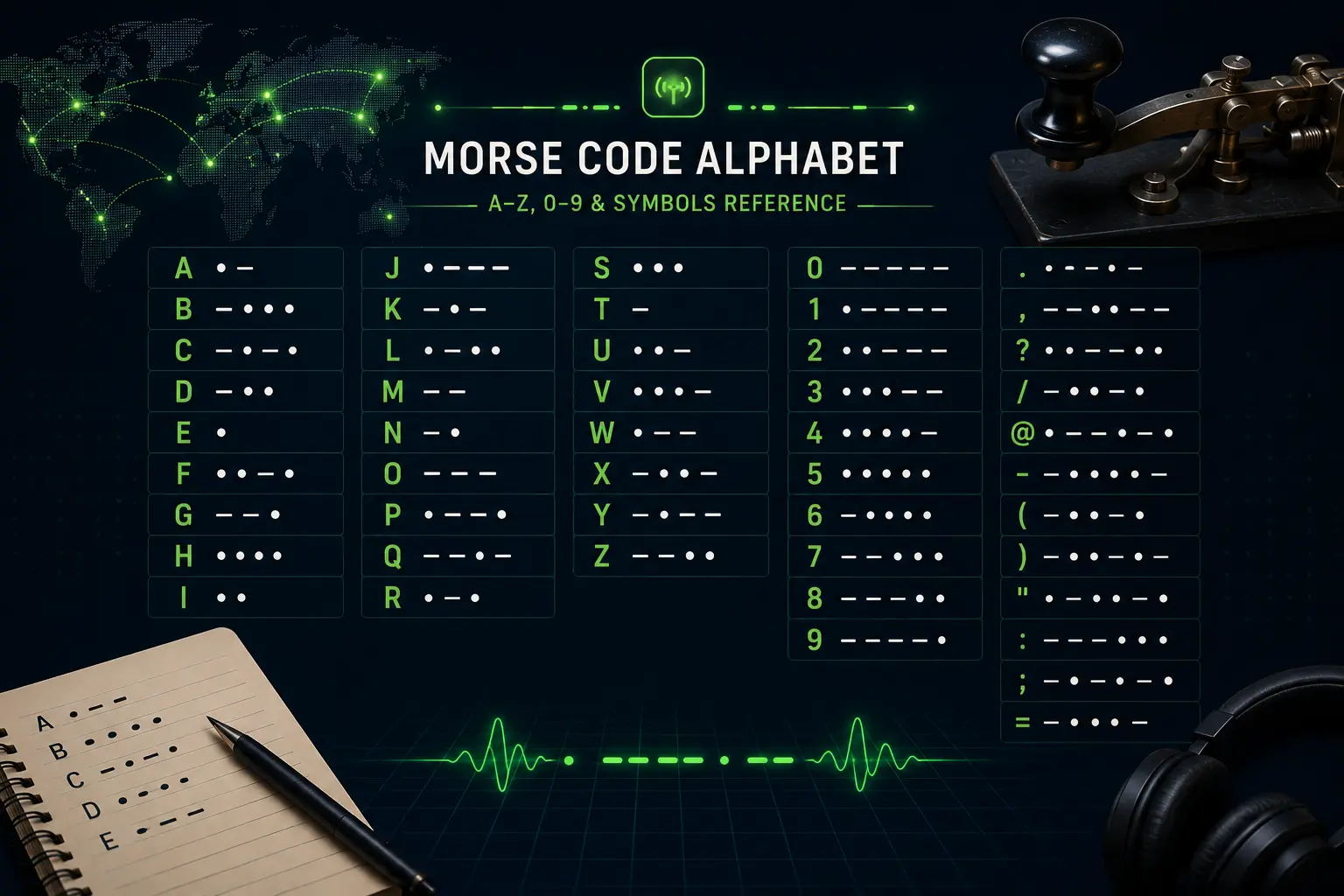
This complete Morse code reference chart is your go-to resource for every letter, number, and commonly used symbol. Whether you are just starting to learn Morse code or need a quick reference while practicing, this page covers everything you need. We have also included memorization tips and a recommended learning order to help you master the code efficiently.
Letters A-Z in Morse Code
Here is the complete Morse code alphabet. Notice how shorter codes are assigned to the most commonly used letters in English, making the system highly efficient.
| Letter | Morse Code | Pronunciation |
|---|---|---|
| A | · — | dit-dah |
| B | — · · · | dah-dit-dit-dit |
| C | — · — · | dah-dit-dah-dit |
| D | — · · | dah-dit-dit |
| E | · | dit |
| F | · · — · | dit-dit-dah-dit |
| G | — — · | dah-dah-dit |
| H | · · · · | dit-dit-dit-dit |
| I | · · | dit-dit |
| J | · — — — | dit-dah-dah-dah |
| K | — · — | dah-dit-dah |
| L | · — · · | dit-dah-dit-dit |
| M | — — | dah-dah |
| N | — · | dah-dit |
| O | — — — | dah-dah-dah |
| P | · — — · | dit-dah-dah-dit |
| Q | — — · — | dah-dah-dit-dah |
| R | · — · | dit-dah-dit |
| S | · · · | dit-dit-dit |
| T | — | dah |
| U | · · — | dit-dit-dah |
| V | · · · — | dit-dit-dit-dah |
| W | · — — | dit-dah-dah |
| X | — · · — | dah-dit-dit-dah |
| Y | — · — — | dah-dit-dah-dah |
| Z | — — · · | dah-dah-dit-dit |
Key Observations for Letters
The alphabet was carefully designed so that the most frequently used letters have the simplest codes. E (the most common letter in English) is just a single dot, while T (the second most common) is a single dash. Letters that are less common have progressively longer and more complex patterns.
One useful pattern to notice: letters whose Morse code begins with a dot tend to be in the first half of the alphabet (A-M), while letters beginning with a dash tend to be in the second half (N-Z). There are exceptions (notably O and W), but this general rule can help with learning.
Numbers 0-9 in Morse Code
Morse code numbers follow a beautifully logical pattern that makes them much easier to learn than the letters. Each number consists of exactly five signals, and they follow a progressive sequence. You can also use our Morse Code Numbers page as a dedicated reference:
| Number | Morse Code | Pattern |
|---|---|---|
| 0 | — — — — — | Five dashes |
| 1 | · — — — — | One dot, then four dashes |
| 2 | · · — — — | Two dots, then three dashes |
| 3 | · · · — — | Three dots, then two dashes |
| 4 | · · · · — | Four dots, then one dash |
| 5 | · · · · · | Five dots |
| 6 | — · · · · | One dash, then four dots |
| 7 | — — · · · | Two dashes, then three dots |
| 8 | — — — · · | Three dashes, then two dots |
| 9 | — — — — · | Four dashes, then one dot |
The Number Pattern Explained
The pattern is a counting system based on the leading element. Numbers 1-5 begin with dots and end with dashes, with the number of leading dots matching the digit. Numbers 6-9 reverse this pattern — they begin with dashes and end with dots. Zero is all dashes, and five is all dots. Once you understand this underlying logic, the numbers become almost automatic.
Think of it this way: count the leading elements. If the number is 3, there are three dots followed by dashes. If the number is 7, there are two dashes followed by dots (since 7 = 10 - 3, it mirrors the pattern of 3).
Punctuation and Special Characters
Morse code also includes representations for common punctuation marks and special characters. These are less frequently used but important for complete communication.
| Character | Morse Code | Description |
|---|---|---|
| Period (.) | · — · — · — | Used to end sentences |
| Comma (,) | — — · · — — | Separates clauses |
| Question Mark (?) | · · — — · · | Ends questions |
| Apostrophe (') | · — — — — · | Used in contractions |
| Exclamation Mark (!) | — · — · — — | Emphasis |
| Slash (/) | — · · — · | Separates alternatives |
| Open Parenthesis (() | — · — — · | Grouping |
| Close Parenthesis ()) | — · — — · — | Grouping |
| Ampersand (&) | · — · · · | “And” symbol |
| Colon (:) | — — — · · · · | Time or list separator |
| Semicolon (;) | — · — · — · | Clause separator |
| Equals Sign (=) | — · · · — | Mathematical equality |
| Plus Sign (+) | · — · — · | Addition |
| Hyphen (-) | — · · · · — | Compound words |
| Underscore (_) | · · — — · — | Spacing in text |
| Quotation Marks (") | · — · · — · | Direct speech |
| Dollar Sign ($) | · · · — · · — | Currency |
| At Sign (@) | · — — · — · | Email addresses |
When to Learn Punctuation
We recommend learning punctuation marks after you have fully mastered the alphabet and numbers. In practice, punctuation is used less frequently in Morse code communication than in written text, and many operators use plain text conventions (like “SOS” instead of an exclamation mark) to simplify transmissions.
Prosigns (Procedure Signs)
Prosigns are special Morse code combinations that represent entire words or commands. They are transmitted without the normal spacing between letters, effectively acting as single characters.
| Prosign | Morse Code | Meaning |
|---|---|---|
| AA | · — — · | End of message (same as AR) |
| AR | · — · — | End of transmission |
| AS | · — · · · | Wait / Stand by |
| BK | — · · · — | Break (invite response) |
| BT | — · · · — | Separator (between address and text) |
| CL | — · — · · — · | Going clear (closing station) |
| CQ | — · — · — | General call (anyone) |
| DE | — · · | “From” (identifies sender) |
| K | — · — | “Over” (invitation to transmit) |
| KN | — · — — · | “Over to specific station” |
| R | · — · | “Received / Roger” |
| SK | · · · — · — | End of contact |
| SOS | · · · — — — · · · | Distress signal |
Prosigns are essential for amateur radio operation and formal Morse code communication. Learn them after mastering the basic character set.
Recommended Learning Order
If you are just starting to learn, do not try to memorize everything at once. Follow this recommended order:
- 1Week 1: Learn E, T, A, N, O, I, S, H (most common letters)
- 2Week 2: Learn R, D, L, C, U, M, W, F (next most common)
- 3Week 3: Learn G, Y, P, B, V, K, J, X (remaining common letters)
- 4Week 4: Learn Q, Z (least common letters)
- 5Week 5: Learn numbers 1-5 (and their pattern)
- 6Week 6: Learn numbers 6-9 and 0
- 7Week 7-8: Learn common punctuation (. , ?)
- 8Week 9+: Learn prosigns and remaining punctuation
For a detailed step-by-step learning plan, read our 7 Proven Steps for Beginners. To test your knowledge, try our 50-Question Morse Code Quiz.
Keep Learning
Related Articles
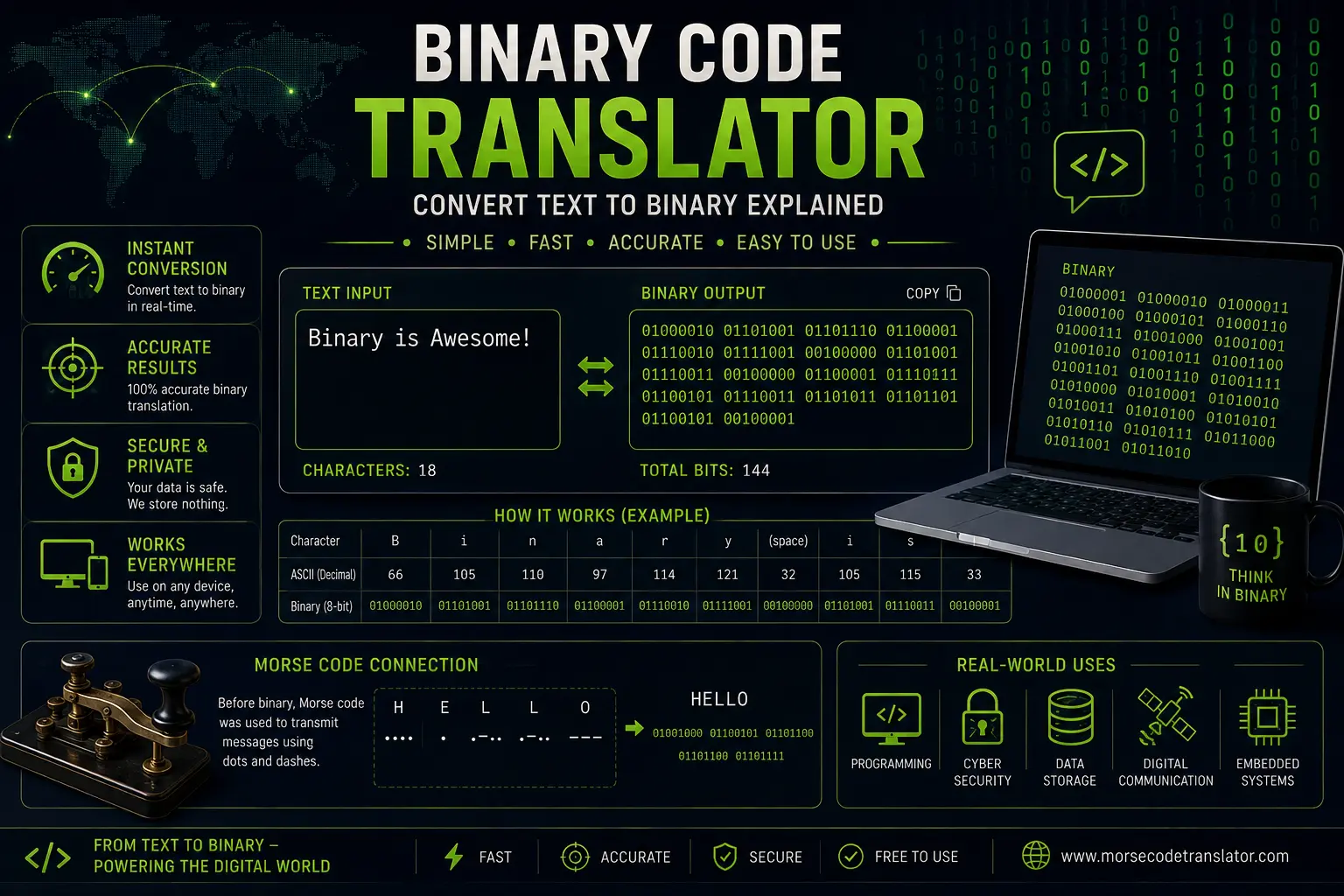
Binary Code Translator: Convert Text to Binary Explained
Complete guide to binary code including how computers use it, the ASCII table, text to binary conversion examples, binary to decimal conversion, and a comparison between binary and Morse code.
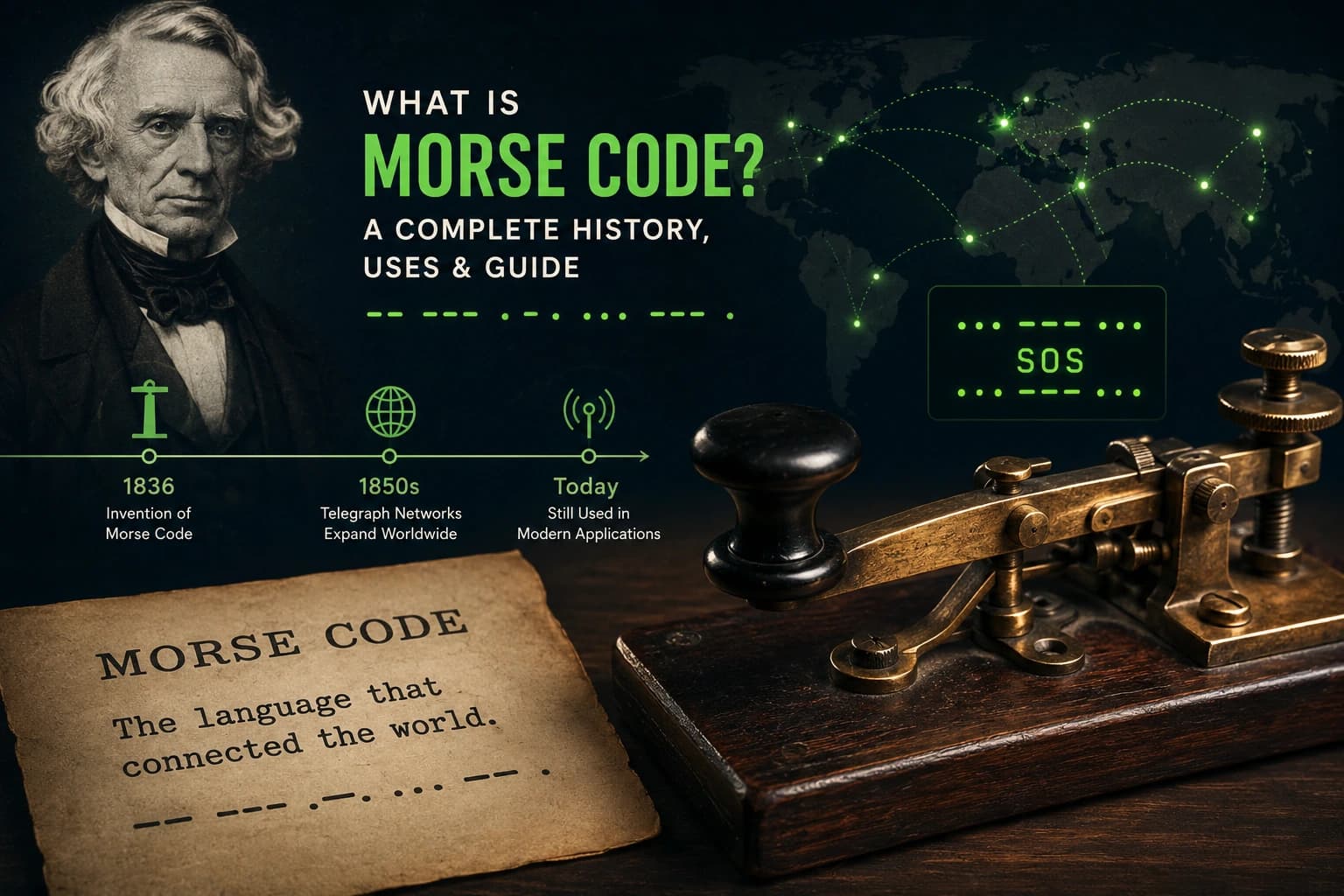
What is Morse Code? Complete History & Guide (2025)
Discover the fascinating history of Morse code from Samuel Morse's invention in 1836 to modern-day applications in emergency signaling, amateur radio, and assistive technology. A complete guide for 2025.
How to Learn Morse Code: 7 Proven Steps for Beginners
A step-by-step guide to learning Morse code from scratch using proven methods like the Koch method, Farnsworth timing, mnemonics, and daily practice routines.