SOS Signal in Morse Code: Complete Emergency Guide
Complete guide to the SOS distress signal including its history, what SOS means, the Titanic story, how to signal SOS with light and sound, and modern emergency alternatives.
Written and reviewed by
Morse Code Translator TeamOur editorial team researches, writes, and reviews content to provide clear and accurate information about Morse code, communication standards, learning methods, and related topics.
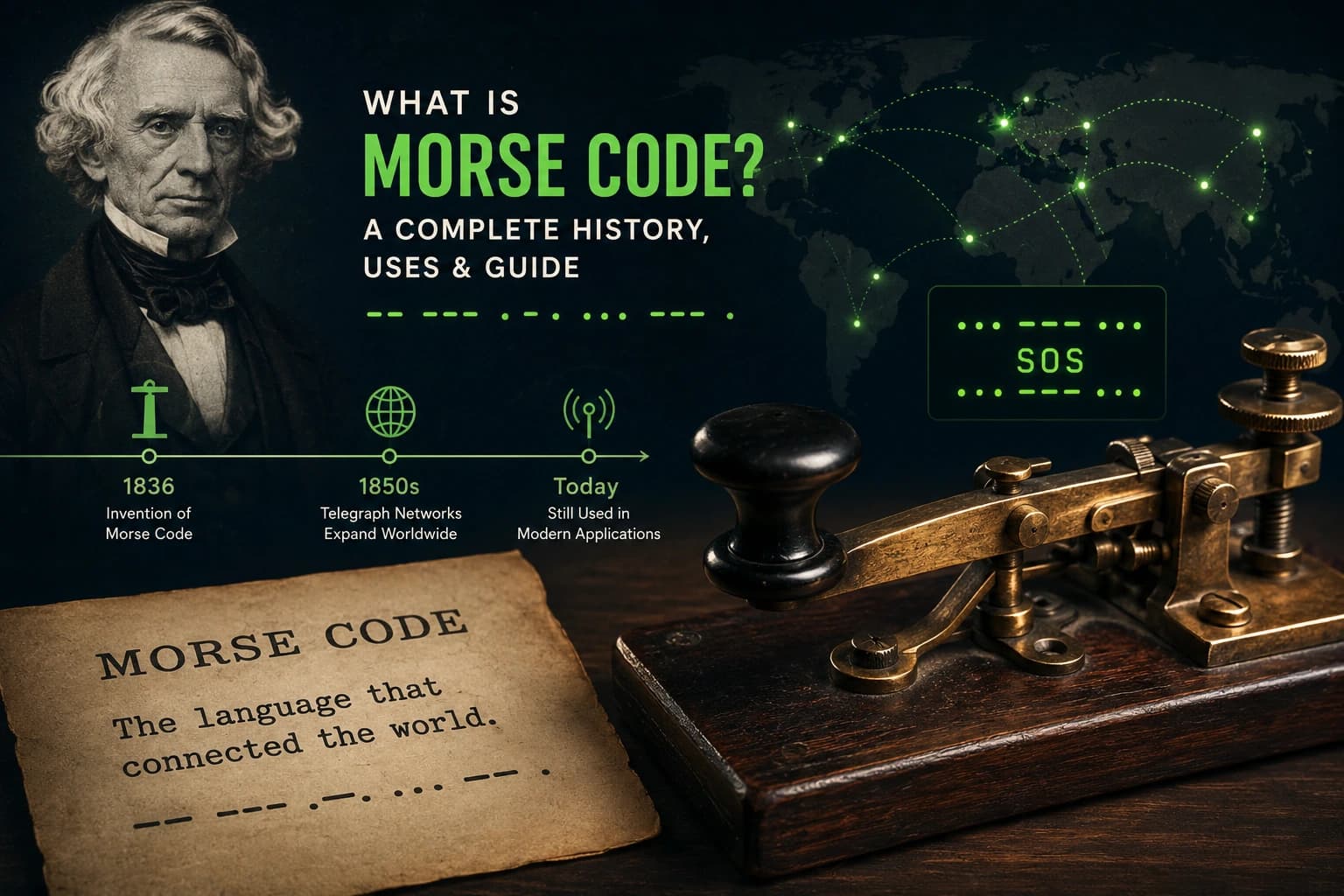
The SOS signal is arguably the most universally recognized distress call in human history. Three dots, three dashes, three dots — this simple pattern has saved countless lives since its adoption over a century ago. In this complete emergency guide, we cover everything you need to know about the SOS signal: its true meaning, its dramatic history, how to send it in various situations, and the modern alternatives available today.
What Does SOS Mean?
One of the most persistent myths about the SOS signal is that it stands for “Save Our Souls” or “Save Our Ship.” This is not true. SOS is not an acronym and does not stand for anything.
The truth is much simpler: SOS was chosen because of its distinctive and easily recognizable pattern. In Morse code, SOS is transmitted as three dots, three dashes, and three dots: ··· ——— ···. For the character-by-character signal and practical emergency guidance, see our SOS Morse Code Guide. This pattern was selected at the International Radio Telegraphic Convention of 1906 because:
- It is simple to transmit. Even an untrained person can send three short, three long, three short signals.
- It is unmistakable. The pattern does not resemble any other commonly used combination in Morse code, making it impossible to confuse with a routine message.
- It is easy to remember. The symmetrical pattern of 3-3-3 sticks in the mind effortlessly.
- It is distinctive even when garbled. Even under poor transmission conditions, the SOS pattern tends to remain recognizable.
The German original designation was “Notruf” (distress call), but SOS was adopted internationally because it was considered the most distinctive signal. The myth that it stands for “Save Our Souls” likely originated from sailors and the public creating a memorable backronym for the already-famous signal.
Before SOS, the international distress signal was CQD (··· — · — — / — · · / — · ·), which had been adopted by the Marconi International Marine Communication Company. CQD is sometimes said to stand for “Come Quick, Danger,” but this is also a backronym — CQ was a general call signal and D stood for distress.
The History of SOS
Adoption as International Standard
SOS was officially adopted as the international distress signal at the International Radio Telegraphic Convention held in Berlin in 1906. The regulation came into effect on July 1, 1908. The convention established that ships in distress would use the SOS signal and that all radio operators were required to monitor for distress calls.
Despite the official adoption, many British operators continued to use CQD for several years, as it was deeply ingrained in their training and practice. The transition was not immediate, and both signals were used concurrently during the transition period.
The RMS Titanic: The Signal That Changed Everything
The most famous use of the SOS signal — and the event that cemented its universal recognition — occurred during the sinking of the RMS Titanic on the night of April 14-15, 1912.
The Titanic struck an iceberg at 11:40 PM on April 14, 1912. The ship's senior wireless operator, Jack Phillips, initially sent CQD signals, as was standard practice for British Marconi operators. His assistant, Harold Bride, suggested also sending the newer SOS signal, and Phillips began alternating between both distress calls.
The Titanic's distress signals were received by several ships, most notably the RMS Carpathia, which was approximately 58 miles away. The Carpathia immediately turned toward the Titanic's position and arrived approximately two hours after the sinking, rescuing 706 survivors from the freezing Atlantic waters.
Tragically, the nearest ship, the SS Californian, was only about 10-20 miles away but had its wireless operator asleep and did not receive the distress signals. This failure led to sweeping changes in maritime safety regulations, including the requirement for 24-hour wireless monitoring on all ships.
The Titanic disaster demonstrated the critical importance of having a universally recognized distress signal. After the disaster, SOS rapidly replaced CQD as the definitive international distress call, and its use became mandatory worldwide.
How to Signal SOS
One of the great strengths of the SOS signal is its versatility. It can be transmitted using almost any medium. Our Morse Code Sounds tool can also help you practice the rhythm before using it in a legitimate emergency. Here are the most common methods:
With Sound
- Whistle: Three short blasts, three long blasts, three short blasts. Repeat at regular intervals (about every 20-30 seconds).
- Horn or car horn: Same pattern as whistle. The long blasts should be noticeably longer than the short ones (approximately three times as long).
- Voice: Shouting “SOS” repeatedly or using the three-short-three-long-three-short rhythm with any sound-making device.
- Tapping: If you are trapped or unable to use your voice, tap the pattern on any hard surface — a wall, pipe, floor, or any object that will produce audible sound.
With Light
- Flashlight: Three short flashes, three long flashes, three short flashes. Hold the light steady (on) for the long flashes, and quickly toggle it for the short ones.
- Phone flashlight SOS: Most smartphones have a built-in SOS feature. On iPhones, rapidly pressing the power button 5 times activates the SOS mode, which can flash the SOS pattern with the flashlight and send your location to emergency contacts.
- Mirror or reflective surface: Flash sunlight toward a potential rescuer using the three-short-three-long-three-short pattern. This technique can be effective over very long distances.
- Fire or flare: Three small fires or flares close together, followed by three larger ones, then three small ones. This is a variation that can be seen from the air.
With Visual Symbols
- Ground signals: If you are in an open area visible from the air, create an SOS pattern on the ground using rocks, logs, clothing, or any available material. The letters should be large enough to be visible from above — at least 10 feet tall, preferably larger.
- SOS in sand or snow: Tramp the letters into sand or snow in a large, visible pattern.
- Flag signals: If you have a flag or brightly colored cloth, wave it in the SOS pattern: three small waves, three large waves, three small waves.
When to Use SOS
SOS should ONLY be used in genuine emergencies where there is:
- Immediate danger to life. This includes situations where someone is seriously injured, in immediate physical peril, or at risk of death.
- A threat to vessel or aircraft safety. If a ship is sinking, a plane is in distress, or a vehicle is in a life-threatening situation.
- No other means of communication. SOS is particularly appropriate when you are isolated and unable to reach emergency services through normal channels (phone, radio).
When NOT to Use SOS
- Never use SOS as a joke or prank. False distress signals are illegal in virtually every country and can result in criminal prosecution.
- Do not use SOS for non-life-threatening situations. If you have a phone signal, call emergency services directly.
- Avoid sending SOS as a test. Many amateur radio operators test their equipment using specific test frequencies, never on emergency frequencies.
False Alarms: Legal Consequences
Sending a false SOS signal is a serious offense in most jurisdictions. Under international maritime law and the laws of most nations, knowingly transmitting a false distress signal carries severe penalties, including:
- Fines ranging from hundreds to thousands of dollars.
- Imprisonment in serious cases, particularly if the false alarm results in the deployment of search and rescue resources.
- Loss of amateur radio license for ham radio operators who send false distress signals.
- Civil liability for costs incurred by emergency services responding to the false alarm.
These strict penalties exist because false SOS signals divert limited emergency resources away from genuine emergencies. A Coast Guard helicopter dispatched to investigate a false SOS signal might be unable to respond to a real emergency elsewhere.
Modern SOS Alternatives
While Morse code SOS remains universally recognized, modern technology has provided additional emergency communication methods:
- Personal Locator Beacons (PLBs): Small, portable devices that transmit your GPS position via satellite to search and rescue authorities when activated.
- SPOT and inReach devices: Commercial satellite communicators that can send SOS messages with your exact location.
- Emergency SOS on smartphones: Both iPhone and Android devices have built-in SOS features that call emergency services and share your location.
- VHF Marine Radio: Channel 16 is the international marine distress frequency for voice communication.
- Emergency Position Indicating Radio Beacon (EPIRB): Required on many commercial vessels, these automatically activate when submerged.
- Satellite phones: Provide communication capability from virtually anywhere on Earth.
These modern alternatives supplement — but do not replace — the fundamental principle behind SOS: in an emergency, you need a simple, universally recognized signal that can be transmitted by any means available. The SOS pattern continues to serve this purpose after more than a century, and it remains one of the most valuable pieces of knowledge anyone can possess.
For the historical background behind Morse code and SOS, read our Complete History Guide.
Keep Learning
Related Articles
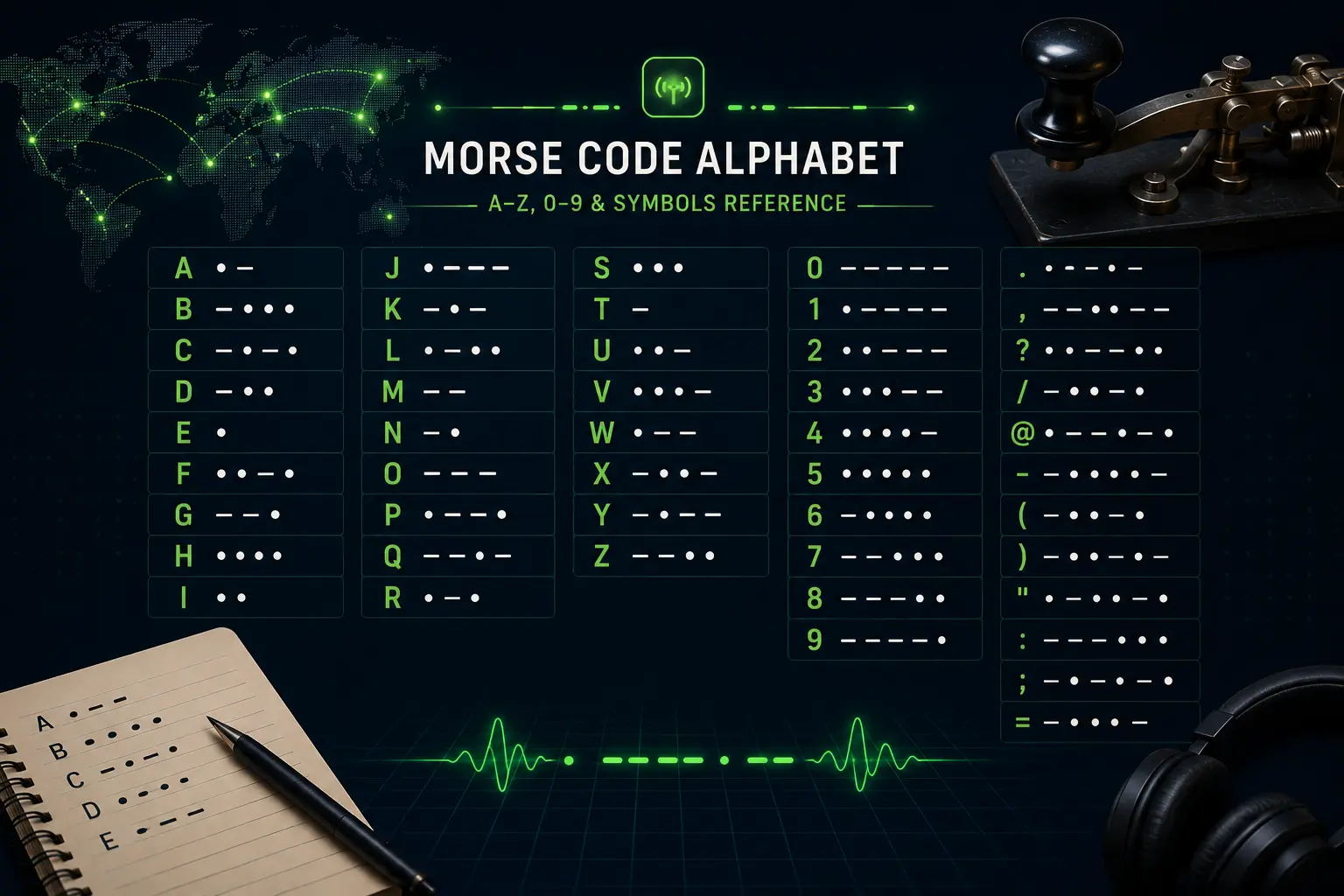
Morse Code Alphabet Chart: Complete A-Z, 0-9 & Symbols Reference
Full reference chart of all Morse code characters including letters A-Z, numbers 0-9, punctuation marks, and special characters with memorization tips and learning order recommendations.
What is Morse Code? Complete History & Guide (2025)
Discover the fascinating history of Morse code from Samuel Morse's invention in 1836 to modern-day applications in emergency signaling, amateur radio, and assistive technology. A complete guide for 2025.
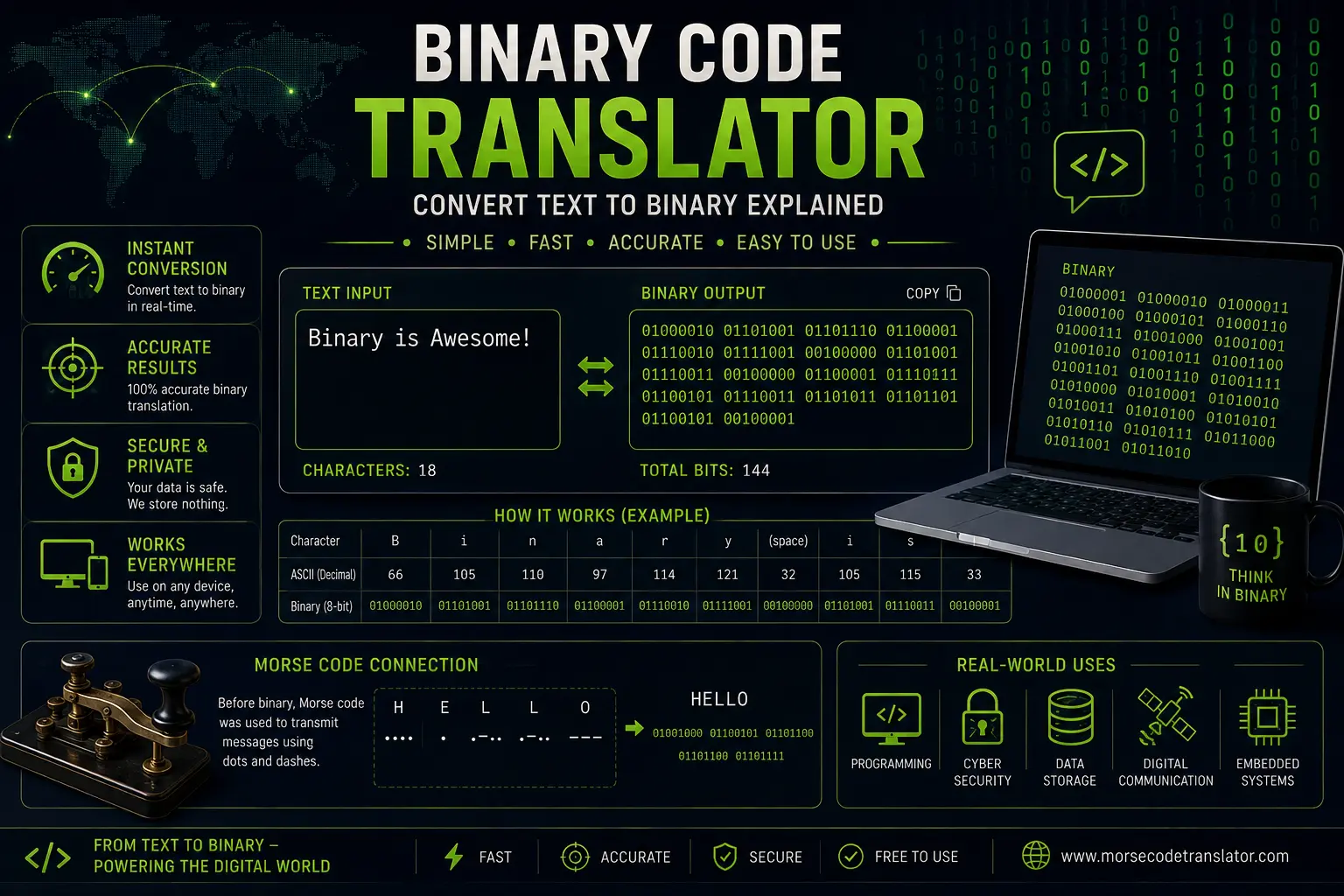
Binary Code Translator: Convert Text to Binary Explained
Complete guide to binary code including how computers use it, the ASCII table, text to binary conversion examples, binary to decimal conversion, and a comparison between binary and Morse code.